

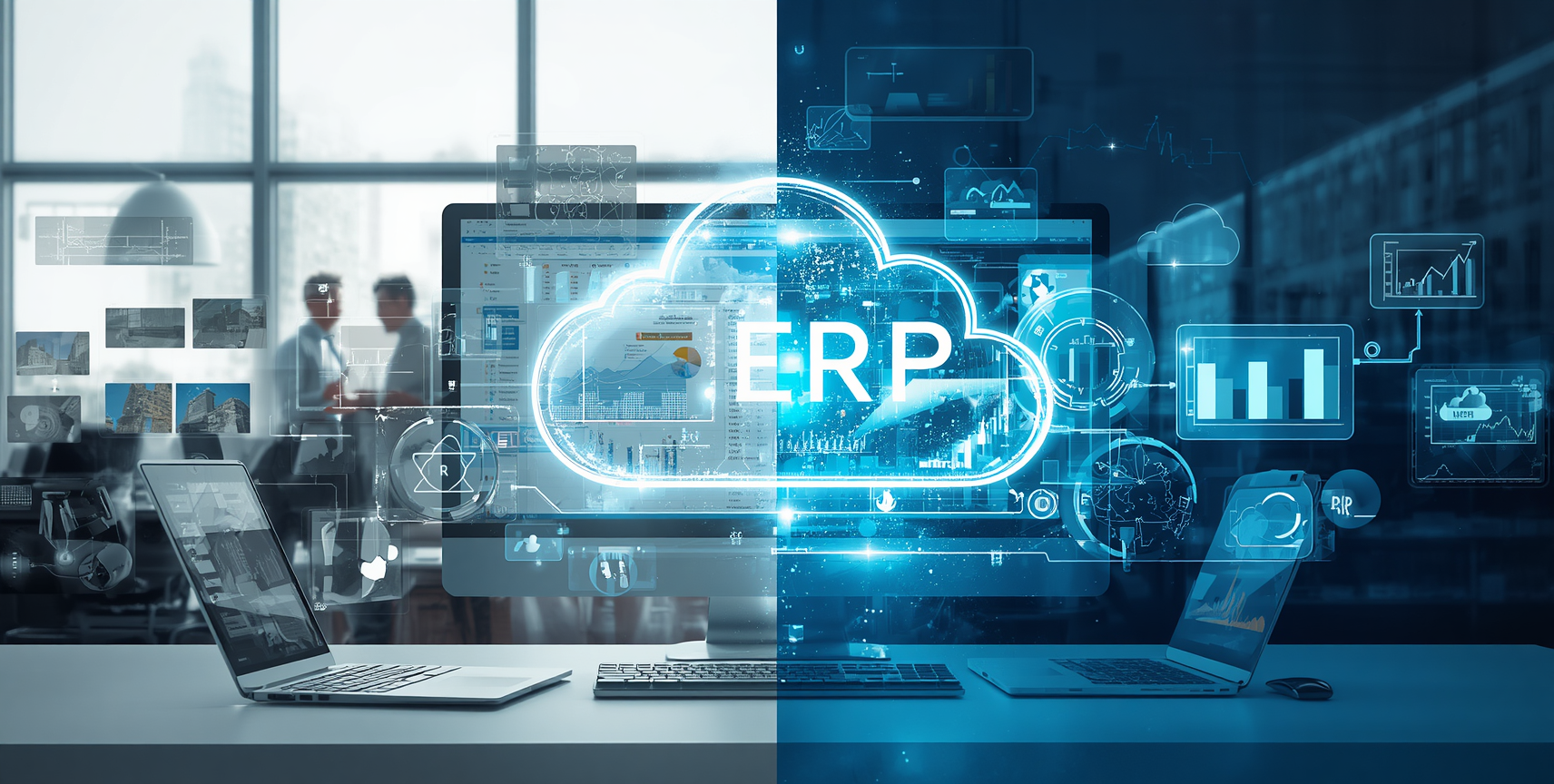
There are many reasons for businesses to discard the desktop accounting software and move to the Cloud Model ERP. Every business, around the world, is quick to transform the way it manages accounting, finance, inventory, and operations. Across all industries, small and medium-sized businesses (SMBs) face difficulties adapting to today’s rapidly evolving business landscape with traditional desktop accounting systems that were previously the key to their success. Cloud-based enterprise systems are increasingly in demand with companies implementing automation, remote access, and real-time analytics.
With the growing need for scalable, secure, and efficient business operations, the transition to cloud ERP software in Pakistan is gaining pace. Whether it’s a startup or a larger enterprise, the reality is that organizations are now realizing the value in moving to cloud ERP systems and understand how these systems can help them achieve long-term growth and digital innovation.
Desktop accounting software is limited in a number of ways
In the past, desktop accounting software was enough to run bookkeeping, payroll, and invoice and financial reporting. Today, however, the need for business flexibility and integration is much greater than what traditional systems can offer.
Some of the disadvantages of desktop software are:
- Limited remote access
- Manual data backups
- Challenge of running several branches.
- Followability lacking (no real-time collaboration at all)
- Higher maintenance requirements
- Not suited for large enterprises or with significant operational complexity
As businesses grow and teams get more digital, these constraints are impeding operational efficiency and delaying decision-making.
Threats to Data Loss for Desktop Software
One of the major concerns of traditional accounting systems is the accounting data loss risks desktop software environment is prone to.
Typically, desktop systems provide storage of financial information on office machines or physical servers. This both presents a number of hazards:
- Hardware failures
- System crashes
- Attacks by a virus or malware
- Accidental file deletion
- Loss or breakage of devices
- Incomplete manual backups
The importance of secure cloud storage becomes apparent when businesses realize that they have lost important financial data because of a technology failure or a cyber incident.
Cloud ERP systems help reduce these risks by automatically backing up data on secure cloud servers with advanced security protections and disaster recovery systems.
Why companies are moving to cloud ERP systems?
The reasons behind companies transitioning to cloud ERP systems are numerous. It can be clearly seen that ERP is being adopted by various industries, and that’s the main reason why firms are shifting to cloud ERP solutions. Cloud ERP solutions are an integration of accounting, inventory, HR, sales, procurement, and reporting in a single service accessible over the internet.
Businesses benefit from:
- Real-time financial visibility
- Secure cloud storage
- Access from any location
- This simplifies the upkeep of the software by allowing it to update and maintain itself automatically.
- Multi-user collaboration
- Improved performance in the reporting and decision-making process
Cloud ERP systems provide businesses with a suite of ERP applications that don’t require local resources to be accessed by the business owner, accountants, or managers.
This adaptability is more crucial than ever, considering the continued rise of remote and hybrid working.
Digital Transformation in Accounting
Cloud ERP forms part of the wider Digital transformation in Accounting. Manual bookkeeping and standalone accounting systems are no longer the cornerstone of businesses. Rather, they are doing so by primarily implementing intelligent digital ecosystems that can streamline money tasks and actions.
These technologies can assist organisations in enhancing accuracy, minimising human error, and saving a large quantity of administrative time.
In Pakistan, with financial compliance demands and tax regulations constantly changing, digital transformation is taking on new significance for businesses.
Increasing Popularity of AI-powered ERP software
Modern ERP platforms are also leveraging the use of AI in order to enhance B2B intelligence and automation. With the help of AI-powered ERP software, companies can shift from traditional accountancy to predictive management and data-driven approaches.
AI can help ERP with:
- Financial forecasting
- Fraud detection
- Expense pattern analysis
- Automated inventory optimization
- Smart reporting & dashboards
- Calculate and project your cash flow.
These smart systems offer companies insightful information that will aid in management in making knowledgeable and quick decisions.
The integration of AI also cuts down on repetitive manual chores, freeing up more time for finance departments to concentrate on strategic planning and promoting growth.
Benefits of Cloud ERP Software in Pakistan
● Remote Accessibility
Any financial or operational data that business owners can access with a laptop, tablet, or cell phone.
● Better Data Security
Cloud solutions usually contain automatic backups, superior cybersecurity defenses, and encrypted storage.
● Scalability
Cloud ERP systems will also have the capacity to grow with the business without massive hardware investments.
● Regulatory Compliance
Modern ERP platforms enable businesses to adhere to the tax and billing regulations much more efficiently.
● Cost Efficiency
Businesses will save on investments in IT infrastructure and maintenance costs linked with conventional servers and desktop systems.
You can get any type of cloud system from suppliers like Hisaab.pk.