

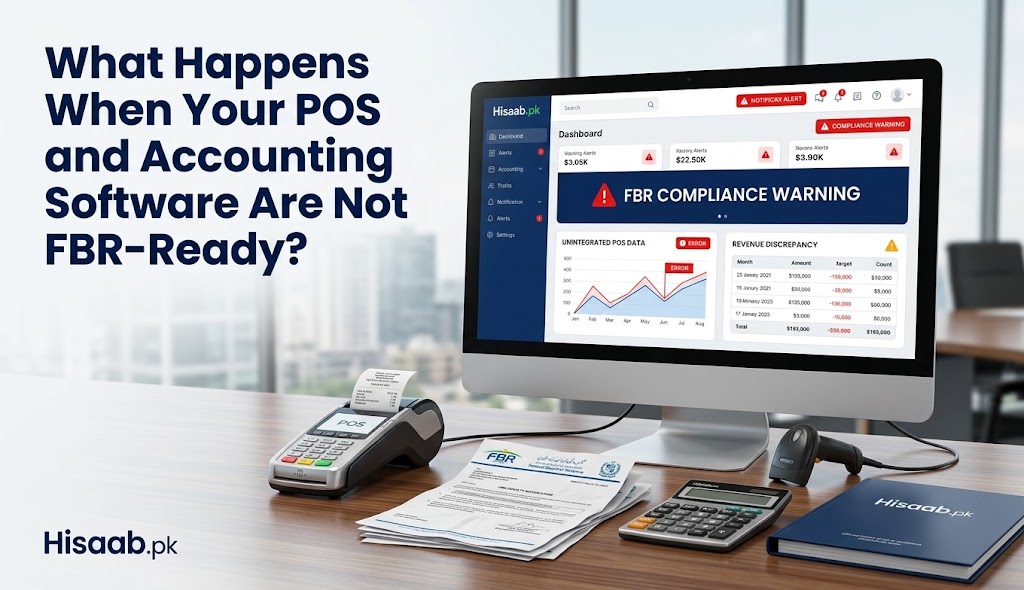
In Pakistan, for retailers, restaurants and sales businesses, software is not just a record book of transactions anymore. The way of compliance with taxes is being integrated into the process of transaction itself. The rules for POS, ERP or invoicing integration through integrators approved by FBR have been introduced, and there are a lot of changes in the rules regarding e-invoicing. When technology isn’t FBR proof, the implications can extend beyond just the inconvenience of the receipt — there may be reporting issues, reconciliation issues, compliance risks, and unreliable accounting data.
Understanding FBR readiness
The FBR software that is compliant is more than a receipt printer. As per the digital invoicing Pakistan framework of FBR, the electronic invoicing system needs to create the invoice information, send the information securely to FBR’s computerised system, receive unique FBR invoice number, keep records and create a verifiable QR code. Activity logs for adjustments, modifications and cancellations are also required. These controls ensure fiscal information is traceable and minimize changes in sales information without an audit trail.
The requirements of FBR have changed from the previous POS software in Pakistan integration regime. According to the Federal Board of Revenue, the introduction of e-invoicing will be compulsory for notified corporate and non-corporate registered persons and will be integrated with the help of a licensed integrator. FBR further states that under the relevant rules, PRFAL can offer the integration services to registered persons on demand. This growth of fiscal digitization is reflected in the 13,454 integrations FBR reported by June 30, 2026, across 37,122 branches.
What are the consequences of systems being disconnected?
The most visible lack in operation seems to be when the cash register and accounting ledger are on separate islands. If there’s no integration with POS and accounting software in Pakistan, sales can be manually entered into the accounting records after the sale. This opens the door for duplicate entries, missing invoices, miscalculations of taxes, and a mismatch of revenue and cash discrepancy.
An FBR integrated accounting software should be able to integrate sales, taxes, inventory, payments, returns and financial reporting through a controlled workflow. If the integration is not in place, a management might be getting two different revenue numbers from the POS and accounting. The month-end reconciliation then becomes a detective activity rather than a routine control.
This is important for businesses that want to follow the digital invoicing Pakistan standards. Electronic invoices must be more than just digital versions of paper receipts—they must include specified data and have to interface with FBR’s computerised systems. The existing rules list the following elements: a unique FBR invoice number, QR code, software registration number, seller information, registration information. A basic invoicing solution can thus generate appealing invoices, but not meet the fiscal standards.
Selecting a more secure technology architecture
The best configuration is to consider both the POS and accounting software integration as layers. A sale should be processed from the checkout into the inventory and accounting system, with the fiscal element ensuring that the necessary information is communicated with FBR. That architecture helps to reduce manual reentry and provides an uniform stream of transaction data.
When examining the best accounting software providers in Pakistan like hisaab.pk, businesses can make a significant leap of confidence and ask for a real life example of the entire process. They should also check the integration status and documentation of the provider rather than take it on faith that the provider is “FBR compliant.”
The new compliance landscape also incorporates flexibility in technology. As digital invoicing API integration becomes more common, software architecture demands robust interfaces, authentication, error handling, logging, and monitoring capabilities. FBR releases technical documentation for digital invoicing API integration and software architecture has a greater need for reliable interfaces, authentication, error handling, logging and monitoring. Any provider with the ability to modify their systems with maintained integration layers has a better chance of being more adaptable than a product that relies on manual uploads or shaky workarounds.
The practical takeaway
The readiness of the FBR is finally a business control issue, instead of just a tax checkbox. A compliant system provides a way to link the time of sale to the records that are needed for tax, inventory, financial reporting, management decision making and branch operations. With the growing digital tax infrastructure in Pakistan, businesses must review their existing software, ensure compliance with FBR requirements, thoroughly test the entire invoice-to-ledger process, and establish integration and support responsibility. Right FBR compliant POS software and FBR integrated accounting software can help to minimize reconciliation efforts and generate cleaner, more defensible records every time. The aim is to create the transaction layer so it can be accurate through time, as business and regulatory requirements change.