

E-invoicing is being promoted by the Federal Board of Revenue (FBR) of Pakistan via initiatives like SRO 1525 (FMCG/Distributors), the XIV Chapter (Tier 1 Retailers), and SRO 428 (Professional Service Providers). The goal of this project is to build a stronger and more long-lasting economy by increasing financial openness and efficiency. E-invoicing lessens the possibility of tax fraud and evasion by ensuring the validity, precision, and real-time monitoring of transactions.
More people will be able to pay using digital methods including online banking, mobile wallets, QR codes, and credit/debit cards as a result of the move to electronic invoicing. Cash transactions will decrease as a result, making it more difficult for companies to hide their profits and avoid paying taxes. Especially for SMEs, the availability of credit and access to capital will improve as a result of the decline in cash transactions.
Local technology integrators may now serve as middlemen for the certification and real-time processing of legitimate invoices according to FBR. The strategic choice has enabled FBR to access resources from the private sector, allowing it to enhance the e-invoicing system by leveraging knowledge and creativity.
Building a scalable and reliable e-invoicing system, raising taxpayer awareness and education, helping companies with technical assistance and training, and setting up a dedicated help desk to handle questions and problems should be the primary goals of FBR’s digital activities. Hisaab.pk provides your business with the best ERP software in Pakistan. It has also resolved your FBR integration with any of its pos or ERP software.
The Significance of Digital Invoicing
• Reports sales transactions in real-time.
• Transparent records help reduce tax avoidance.
• Makes it easier for businesses to comply.
• Invoices are provided with QR codes after verification.
• Wholesalers and retailers follow different processes.
The Importance of FBR POS Integration in the Year 2025 and What It Is?
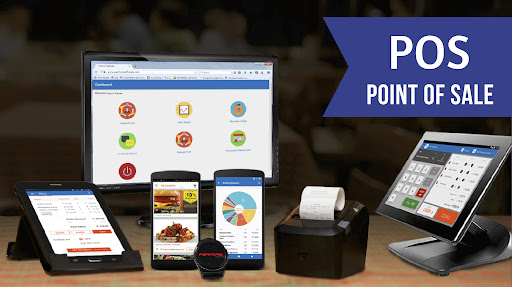
Integrating FBR point of sale software with the FBR’s real-time sales tracking portal is vital in 2025, allowing companies to report all sales to the government immediately. The economy benefits from better tax collection and less underreporting in certain areas because of this transparency, which also discourages underreporting generally.
Challenges for Retailers Without Integration of FBR-Integrated POS and ERP Systems

• Risks to Compliance: Errors or non-compliance with tax requirements might occur as a result of manual billing and reporting.
• Ineffective Operations: Inventory, sales, and accounting operate independently without ERP integration, leading to inefficiencies.
• A Lack of Transparency: Customers and authorities lose faith when records are inaccurate.
• Penalties and Legal Risks: Non-compliant merchants run the risk of paying hefty fines or having their businesses suspended due to legal concerns.
• Competitive Disadvantage: Customers prefer businesses that give FBR-verified receipts, which is a competitive disadvantage.
Factors That Make FBR-Integrated ERP and Point of Sale Software Essential
• Guarantees Regulatory Conformity: FBR digital invoicing with tax breakdowns and QR codes is automatically generated, doing away with compliance headaches, audits, and fines.
• Establishes Credibility and Honesty with Customers: Customers verify the legitimacy of receipts using the QR codes provided by FBR, which helps build trust and reputation for the brand.
• Improves Efficiency in Company Operations: Real-time inventory tracking, bookkeeping, and employee administration made easy.
• Improves Transparency and Reduces Fraud: By eliminating opportunities for sales underreporting or concealment, FBR integration increases transparency and decreases fraud.
• Enhances Financial Management and Decision-Making: Produces valuable data insights for more strategic planning and increased profitability, which improves financial management and decision-making.
• Prevents Penalties and Business Disruption: Eliminates the possibility of penalties and interruptions to business operations by removing the human element and the possibility of missed filings or mistakes.
• Future-Proofs the Retail Business: Retailers in Pakistan are better prepared for future integrations such as digital payments, e-commerce, and AI-driven analytics since this program aligns them with international best practices.
Customers, Merchants, and FBR Cloud Invoicing
• Point-of-Sale (POS) Integration: Retailers can’t upload sales data in real time without integrating their point-of-sale (POS) systems with FBR digital invoicing.
• Cash and Card Sales: All sales made with cash or a credit card must have an instantaneous invoice generated using an FBR QR code.
• Returns and Refunds: Credit notes or reversal invoices must be issued by retailers for item returns to facilitate refunds.
• Sales and Other Promotions: Stores should check that FBR digital invoicing accurately represents sales and other promotional discounts.
• Customer Awareness: Retailers are required to display FBR verification on invoices to raise customer awareness clearly.
FBR POS Integration
• Buyers go to the checkout page after adding products to their cart.
• Products are scanned, and the salesperson processes payments.
• After the sale, FBR receives the invoice data.
• FBR returns the fiscal invoice number to the point of sale software after generating it.
• Data from transactions is synced with FBR’s central server by the point of sale software.
• A QR code and the FBR logo are printed on the invoice.
• The client will get a receipt that includes the invoice number, logo, and QR code.
• Verification of invoices with the FBR mobile app.